Blog

Ford Winter Maintenance Plan 

Winter Maintenance

What Is the Recommended Minimum Tire Tread Depth for Driving on Winter Roads?

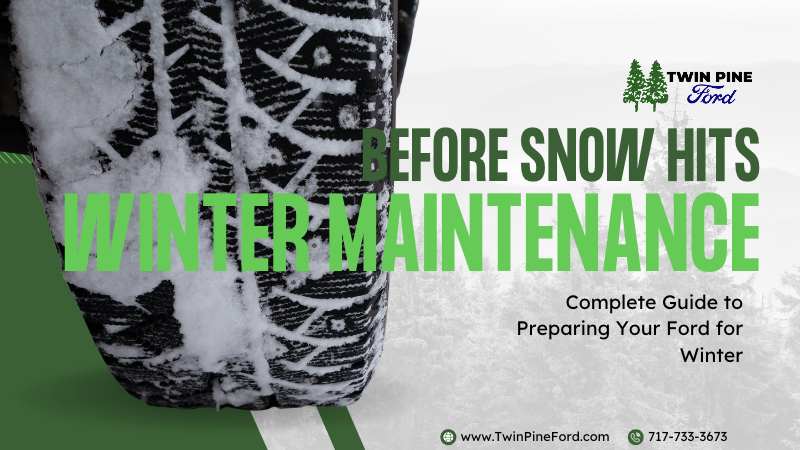
When navigating the challenging freeze-and-thaw cycles of a Pennsylvania winter, having confidence in your vehicle starts where the rubber literally meets the frozen asphalt. The direct answer regarding winter road safety is clear: while the legal minimum tread depth across Pennsylvania is 2/32 of an inch, automotive safety engineers, tire manufacturers, and certified Ford technicians strongly recommend a minimum tread depth of 5/32 to 6/32 of an inch before tackling snow, slush, and frozen rural roadways. At 2/32 of an inch, your tires are legally worn out, and on wet or snow-covered surfaces, they lose almost all capability to channel winter slush away from the contact patch.
To understand why 2/32 of an inch is inadequate in winter weather, consider the physics of winter traction. A tire does not grip hard-packed snow merely through surface friction against the rubber. Instead, it relies on snow-on-snow mechanical cohesion. Specialized winter and high-performance all-weather tread designs incorporate deep, lateral grooves and thousands of microscopic zig-zag slits called sipes. As your vehicle drives forward, these deep grooves pack loose snow into dense blocks inside the void areas. Snow grains bond aggressively with one another—providing far greater traction against the snowy road surface than frozen rubber ever could on its own. When your tread wears beneath 5/32 of an inch, these voids become too shallow to capture and compact snow. Simultaneously, the tire loses its ability to evacuate standing water and dense roadway slush. Without adequate groove volume, slush builds up ahead of the rolling contact patch, lifting the tire off the pavement. This leads directly to slushplaning or hydroplaning at speeds well below the posted limit on local corridors like Route 222 or Route 322. Maintaining 6/32 of an inch gives your Ford the void-to-tread ratio necessary to clear slush channels dynamically, keeping your tires firmly planted against solid ground.

How to Accurately Measure Tread Depth at Home Using the Quarter and Penny Tests

You do not need a professional service bay to run an initial check on your tire health before cold weather sets in. Two simple pocket coins—a Washington quarter and a Lincoln penny—give you immediate, practical benchmarks right in your Ephrata driveway. The Washington Quarter Test (Target: 4/32" to 5/32"): Take a quarter and turn George Washington upside down so his head faces downward into the tire tread. Insert the coin into several deep grooves across the tire. If the top of Washington's head is completely covered by the tread block, you have at least 4/32 of an inch of tread remaining. If his entire head and hair are visible, your tread is 4/32" or lower, meaning your tires lack the void depth required to evacuate slush and pack snow effectively. For reliable winter grip, you should plan on replacement right away. The Lincoln Penny Test (Bare Legal Minimum: 2/32"): Turn Abraham Lincoln upside down with his head facing the groove. If the top of Lincoln's head is visible, your tire tread has dropped to or below the legal minimum of 2/32 of an inch. At this stage, your tire is legally worn out across Pennsylvania, will fail state vehicle safety inspection, and creates an extreme safety hazard on wet or icy roads.
Measuring Across Inner, Center, and Outer Ribs: Tires rarely wear down in a completely uniform pattern. Misalignment, worn suspension dampers, or incorrect tire pressure can cause the inner shoulder to wear down while the outer shoulder retains plenty of rubber. Always take measurements across three distinct points along the same tread plane: the inside shoulder, the center ribs, and the outside shoulder. Your actual tire condition is always dictated by the lowest measured groove. While coins offer quick estimates, our service team recommends using an inexpensive digital tire tread depth gauge. These digital gauges measure depth in thirty-seconds of an inch or millimeters with calibrated precision, eliminating any guesswork before winter blizzards arrive.
If your tires measure between 4/32" and 5/32", they may get you through dry autumn commutes, but they will compromise steering control when descending slippery hills along the Cocalico Creek basin. Need an exact reading? Stop by our Ephrata service drive anytime for a complimentary digital tread analysis.

Stopping Distances and Ice Traction: Why 2/32-Inch Legal Tread Fails on Slippery Roads

The difference between stopping safely at a red light on Route 30 and sliding helplessly into an intersection comes down to your tread depth and siping density. Testing conducted by tire manufacturers and automotive safety organizations highlights a dramatic, non-linear correlation between tread depth loss and emergency braking distances in snow.

Tread Depth

Relative Snow Stopping Distance (30-0 MPH)

Slush Evacuation Efficiency

Safety Evaluation

10/32" (New)

~120 - 145 feet

100% (Maximum Channeling)

Optimal Winter Performance

6/32" (Recommended Min)

~175 - 190 feet (+35%)

75% (Adequate Void Volume)

Safe Winter Driving Threshold

4/32" (Marginal)

~230 - 260 feet (+70%)

45% (Noticeable Slushplaning)

High Risk in Snow Accumulation

2/32" (Legal Minimum)

~360+ feet (+150%)

15% (Critical Hydroplaning Danger)

Severe Hazard; Inadequate Traction

The Physics of Sipes, Biting Edges, and Void Ratios: Modern winter and all-weather tires rely on complex tread engineering to maintain grip. Each individual tread block is scored with multiple high-density sipes—fine incisions that flex and deform under braking pressure. This flex generates thousands of razor-sharp biting edges that score the surface micro-texture of glazed snow and ice. When a tire wears down to 2/32 of an inch, those molded sipes disappear entirely because manufacturers stop sipe depth at 20% to 30% of total tread depth to preserve carcass structural rigidity. A worn tire transforms into an unbroken, hardened rubber band. When you depress the brake pedal on packed snow, anti-lock braking systems (ABS) pulse rapidly, but without biting edges to claw the surface or groove voids to compress snow grains, kinetic energy cannot be converted into stopping traction. On rural Lancaster County descents, stopping distances at 2/32" can increase by more than double the length of a football field compared to a fresh tire.

What Is the Difference Between All-Weather Tires and All-Season Tires for Winter Driving?

A common point of confusion among drivers is the difference between standard All-Season tires and newer All-Weather tires. While their names sound interchangeable, their chemical formulation and winter test certifications represent very different levels of capability when temperatures plummet across southeastern Pennsylvania.

Standard All-Season (M+S)

All-season tires carry the Mud and Snow (M+S) designation, which is based purely on geometric tread void ratios, not winter traction testing. Their rubber compounds utilize polymers engineered for tread life and fuel economy in warm weather. Once ambient temperatures dip below 45°F (7°C), the rubber stiffens and experiences 'glass transition,' losing pliability and failing to conform to cold pavement micro-textures.

All-Weather (3PMSF Certified)

All-weather tires bridge the gap. They feature the severe snow Three-Peak Mountain Snowflake (3PMSF) symbol, meaning they have passed rigorous ASTM winter traction testing on packed snow. Built with high-silica rubber compounds, all-weather tires stay supple well below freezing while remaining durable enough to run all summer long without swapping sets each spring.

Dedicated Winter Tires

Dedicated winter tires (such as Michelin X-Ice or Bridgestone Blizzak) use specialized hydrophilic compounds with microscopic pores that absorb thin water layers on ice. Featuring maximum sipe density, they provide unbeatable braking and cornering grip below 45°F. However, their soft compound wears rapidly in spring and summer heat, requiring seasonal swapping.

Why Does Tire Pressure Drop When Temperatures Fall in Ephrata and Lancaster County?

Every November across Lancaster County, drivers wake up on crisp mornings to see the low tire pressure warning light glowing on their instrument cluster. This seasonal drop in pressure is driven by fundamental physics—specifically Gay-Lussac's Law and the Ideal Gas Law (PV = nRT). When air cools inside a sealed tire chamber, the gas molecules lose kinetic energy, move slower, and collide less forcefully against the tire's inner walls. The reliable rule of thumb is that tire pressure drops by approximately 1 to 2 PSI for every 10-degree Fahrenheit drop in ambient temperature. When Ephrata experiences an autumn swing from a balmy 65°F afternoon down to a 25°F overnight freeze, your tires can easily lose 4 to 6 PSI without experiencing any physical leak, puncture, or valve stem flaw.
The Dangers of Cold Under-Inflation: Driving on under-inflated tires during winter severely compromises vehicle dynamics. An under-inflated tire sags in the center of its contact patch, forcing vehicle weight onto the outer shoulders. This cupping effect closes up the central tread grooves, drastically reducing your tire's ability to evacuate slush and melted road snow. Under-inflation also increases rolling resistance, reduces fuel economy, and triggers uneven shoulder wear that shortens tire life. Furthermore, cold temperatures can cause valve stem rubber to harden slightly, increasing microscopic seepage. Check your tire pressures monthly using the cold-spec PSI values found on your Ford driver-door jamb sticker, rather than the maximum pressure molded onto the tire sidewall.

Winter Road Readiness: Essential Cold-Weather Maintenance for Lancaster County Ford Drivers

While maintaining proper tire tread depth is the cornerstone of winter driving safety, surviving a severe Pennsylvania freeze requires your entire vehicle to operate in harmony. From sub-zero battery cranking demand to clear visibility during freezing rain squalls, seasonal preventative care prevents inconvenient breakdowns along rural backroads.

Battery Load Capacity

At 32°F, a standard vehicle battery loses roughly 20% to 35% of its cranking power; at 0°F, available amperage plummets by nearly 60%. Meanwhile, thickened engine oil requires up to double the electrical power to turn over cold pistons. A professional battery conductance load test identifies failing cells before freezing temperatures leave you stranded. Explore our battery service insights to stay prepared.

Synthetic Oil & Washer Fluids

Conventional oils thicken rapidly in cold weather, delaying critical lubrication to upper valvetrains on cold start-ups. Upgrading to Motorcraft full synthetic or synthetic-blend 5W-20 or 5W-30 motor oil ensures instantaneous flow upon ignition. Simultaneously, switch out summer bug wash for winter-grade de-icing fluid rated to at least -20°F to prevent washer nozzles and pump lines from bursting.

Silicone Wipers & Defrosting

Standard rubber wiper blades freeze stiff, streak uncontrollably, and tear when clearing packed ice. Heavy-duty winter beam or silicone blades resist ice build-up inside the frame and retain full contact across curved windshield glass. Ensure your cabin HVAC blower motor and heated defrost grid operate seamlessly before the first morning frost arrives.

What Cold-Weather Maintenance Does a Ford Vehicle Require Before Winter in Pennsylvania?

Ford vehicles are engineered with sophisticated driveline technologies designed to master adverse weather, but these systems rely on proactive seasonal verification. Ford's Intelligent 4WD and AWD systems continually monitor wheel slippage, steering wheel angle, throttle position, and lateral acceleration hundreds of times per second. During pre-winter service, technicians verify electronic transfer case actuator function, rear differential clutch pack health, and Power Transfer Unit (PTU) fluid integrity. Coupled with AdvanceTrac with Roll Stability Control (RSC), your Ford selectively modulates individual brake calipers and adjusts engine output to counteract understeer or oversteer when crossing icy patches. However, AdvanceTrac's traction algorithms assume the vehicle is equipped with adequate tire tread depth. When tires are bald or mismatched in wear, the wheel-speed differential can confuse ABS sensors and degrade system response.
Power Stroke Diesel Fuel Systems & Block Heaters: For Ford Super Duty drivers working farms across Denver and Lititz, cold weather demands diesel-specific preparation. At sub-freezing temperatures, paraffin wax molecules suspended in untreated diesel fuel crystallize, clogging primary and secondary fuel filters. Ensure your fuel filter water separator is drained of condensation, verify the internal fuel bowl heater heating element is operating, and test your 110V engine block heater cord for continuity. FordPass Diagnostic Monitoring: Modern Ford owners can leverage the FordPass mobile application to track live tire pressure monitoring (TPMS) data from their smartphone before stepping outside. FordPass also sends early warnings regarding 12V battery deep-sleep states and scheduled maintenance intervals, giving you full control over seasonal upkeep.

How Often Should Engine Coolant Be Flushed and Tested for Freeze Protection?

Engine coolant is not just for preventing overheating in summer traffic; its primary winter function is providing chemical freeze protection so that cooling jackets inside your engine block do not crack when parked during sustained cold snaps. Modern Ford vehicles generally utilize advanced Organic Acid Technology (OAT) coolant, such as Motorcraft Yellow Antifreeze/Coolant, which carries a manufacturer-recommended initial replacement interval of 6 years or 100,000 miles (subsequent flushes every 3 years or 50,000 miles). The 50/50 Dilution Ratio Standard: Coolant must be maintained at an exact 50/50 mixture of concentrated ethylene glycol and demineralized distilled water. This specific equilibrium provides freeze protection down to -34°F (-37°C) while simultaneously raising the boiling point to 265°F under pressure. If a driver mistakenly 'tops off' the coolant expansion tank with plain tap water over the summer, the mixture dilutes. Diluting coolant down to a 30/70 ratio raises the freezing threshold up to 10°F, leaving your engine block highly vulnerable during typical Lancaster County mid-winter drops.
Hydrometer Testing and Acidic Degradation: Over years of thermal cycles, corrosion inhibitors such as carboxylates and silicates break down. When inhibitors deplete, coolant becomes acidic, attacking aluminum cylinder heads, copper heater cores, and radiator seals from within. Our factory-certified technicians test freeze protection levels and chemical pH using optical refractometers and digital hydrometers to ensure your cooling system retains factory-grade defense.
Never mix incompatible coolant colors, such as older green or orange formulations with Motorcraft Yellow. Incompatible chemistries can coagulate into a thick gel that blocks narrow heater core passageways, robbing your cabin of heat on the coldest mornings.

How Does Road Salt and Brine Used on Pennsylvania Highways Affect Ford Undercarriages, and How Can It Be Prevented?

PennDOT maintenance crews work tirelessly to keep major arterial roads like Route 222, Route 30, and the PA Turnpike passable during winter storms. However, the chemicals used—predominantly liquid rock salt brine and liquid magnesium chloride (MgCl2)—pose severe corrosive threats to vehicle underbodies. Unlike traditional crystalline rock salt that bounces off pavements, liquid brine is an engineered liquid anti-icer. When sprayed before a storm, it coats roadways evenly. As traffic drives over the treated pavement, rolling tires atomize this brine into a fine chemical mist that penetrates deep into chassis seams, rocker panels, subframes, steering knuckles, and electrical wiring connectors. Magnesium chloride is particularly aggressive because it is hygroscopic; it draws moisture out of the surrounding air even when dry, maintaining active electrolytic corrosion across exposed metals well after the storm has ended.
Prevention and Protection Best Practices: While modern Ford trucks and SUVs utilize high-strength, military-grade aluminum alloy bodies that naturally resist red rust, steel chassis components, suspension links, brake lines, and fasteners require ongoing seasonal protection: • Routine Undercarriage Flushes: Rinse your vehicle's underbody at least once every 10 to 14 days during active salting periods. Avoid high-pressure blasts into delicate electrical sensors, but thoroughly wash out boxed frame rails and wheel wells. • Corrosion Inhibiting Barriers: Before winter, apply a petroleum- or lanolin-based underbody penetrant coating to critical suspension parts, brake line brackets, and trailer hitch receivers. • Brake Line and Caliper Slide Inspections: Salt crystallization causes brake caliper slider pins to seize and speeds up surface pitting on brake rotors. Routine inspections maintain consistent pedal feel when stopping on slippery surfaces. Review our brake service guide to ensure your stopping hardware is fully protected.

Navigating Rural Lancaster County Rolling Hills and Farmland Snowdrifts

Driving through Lancaster County in the dead of winter is uniquely beautiful, but our pastoral geography creates localized driving challenges not found on interstate highways. Open agricultural fields across Ephrata, Clay, Upper Leacock, and Warwick Townships lack natural windbreaks or highway tree barriers. High winter winds sweep uninterrupted across open cornfields, picking up loose snow and depositing sudden, dense snowdrifts across two-lane rural roads like Route 772, Rothsville Road, and Schoeneck Road.
A pavement surface that appears bone-dry on a straightaway can abruptly transition into an eight-inch snowdrift or a sheet of invisible black ice as you round an elevation change. Rolling hills along the Susquehanna River Valley and Welsh Mountain create dramatic micro-climates. Valley bottoms near creek beds often sit 5 to 8 degrees colder than higher plateaus, causing condensation from morning fog to freeze instantly onto asphalt bridges and shaded hollows. When climbing or descending these steep, rolling rural grades, adequate tire tread depth is what prevents your vehicle from losing directional control. Adequate tread depth allows your tires to cut down through the powdery surface drift to bite into underlying asphalt. If your tread is worn down toward the legal minimum, tires simply ride up on top of the drift like skis, breaking traction and triggering vehicle yaw that even advanced stability systems cannot overcome.

What Should Be Included in an Emergency Winter Car Kit for Lancaster County Rural Backroads?

On remote backroads where mobile cell reception can drop out in valleys and tow truck response times lengthen during heavy blizzards, keeping a dedicated cold-weather emergency kit in your Ford trunk or truck bed is essential peace of mind. Prepare these three categories of survival equipment before winter storms hit:

Traction & Recovery Gear

• Compact Folding Shovel: Heavy-duty aluminum or tactical polymer scoop to clear packed snow from under-chassis hang-ups. • Traction Substrate: A 20-lb bag of non-clumping clay cat litter or coarse sand to pour directly under spinning drive tires. • Tow Recovery Strap: Heavy-duty 20,000-lb rated strap with looped ends for vehicle-to-vehicle recovery.

Jump Starting & Lighting

• Lithium Jump-Starter Pack: High-output portable pack that starts dead batteries without relying on a second vehicle. • Heavy-Duty Jumper Cables: 4-gauge, 20-foot copper cables for cold-cranking reliability. • LED Headlamp & Flare Beacons: Hands-free illumination and magnetic roadside emergency flashing beacons for night visibility.

Personal Warmth & Sustenance

• Thermal Blankets: Reflective Mylar space blankets plus wool blankets to retain body heat if the engine cannot run. • Cold-Weather Apparel: Insulated gloves, wool socks, waterproof knit cap, and hand warmers. • Non-Perishable Food: High-protein energy bars, dried fruits, and metal water bottles that won't burst when frozen.

When to Replace Tires vs. Rotate: Identifying Uneven Winter Wear Patterns

Before deciding whether to replace or simply rotate your tires ahead of winter, a close physical inspection of the tread face will reveal critical diagnostic details regarding your vehicle's mechanical alignment and inflation history: • Center Rib Wear: When the center of the tire tread is worn deeper than the shoulders, the tire has been run over-inflated. This reduces your footprint and limits the contact area needed for icy traction. • Shoulder Wear (Both Edges): Both outer edges worn smooth while the center has depth indicates sustained under-inflation, which creates premature heat buildup and slushplaning risks. • Feathering across the Tread: When tread blocks feel smooth when sliding your hand one way across the tire, but sharp and jagged when sliding the other, your vehicle's toe alignment is out of spec. • Cupping or Scalloping: Rhythmic high-and-low dips around the circumference suggest worn suspension dampers, bad wheel bearings, or out-of-balance assemblies, causing the tire to bounce down the road.
The 5,000 to 7,500-Mile Rotation Rule: Rotating your tires every 5,000 to 7,500 miles—coinciding with your oil change interval—ensures uniform tread wear across front steering and rear load-bearing axles. If your front tires have worn down to 5/32" while the rears retain 8/32", rotating the deeper tread to the rear axle is critical for vehicle stability, preventing dangerous oversteer slides on snowy turns.

Schedule Your Ford Winter Tire and Seasonal Inspection at Twin Pine Ford in Ephrata

Don't wait for the first major Pennsylvania snowstorm to discover that your tire tread has dropped into the danger zone. At Twin Pine Ford in Ephrata, our factory-trained and certified technicians have proudly served our local community for over 70 years with a transparent, honest, and customer-first approach. Whether you need a precision digital tread depth evaluation, a winter multi-point inspection, battery conductance testing, or a new set of severe-snow rated tires backed by nationwide warranty protection, we have you covered. Enjoy our simple, transparent experience, competitive tire price match guarantees, and the convenience of our complimentary pickup and delivery options. Visit us today at 620 N Reading Rd in Ephrata, PA, or give our friendly service advisors a call directly at 717-733-3673 to ensure your Ford is ready for every mile of winter weather ahead.
What Is the Recommended Minimum Tire Tread Depth for Driving on Winter Roads?

When navigating the challenging freeze-and-thaw cycles of a Pennsylvania winter, having confidence in your vehicle starts where the rubber literally meets the frozen asphalt. The direct answer regarding winter road safety is clear: while the legal minimum tread depth across Pennsylvania is 2/32 of an inch, automotive safety engineers, tire manufacturers, and certified Ford technicians strongly recommend a minimum tread depth of 5/32 to 6/32 of an inch before tackling snow, slush, and frozen rural roadways. At 2/32 of an inch, your tires are legally worn out, and on wet or snow-covered surfaces, they lose almost all capability to channel winter slush away from the contact patch.
To understand why 2/32 of an inch is inadequate in winter weather, consider the physics of winter traction. A tire does not grip hard-packed snow merely through surface friction against the rubber. Instead, it relies on snow-on-snow mechanical cohesion. Specialized winter and high-performance all-weather tread designs incorporate deep, lateral grooves and thousands of microscopic zig-zag slits called sipes. As your vehicle drives forward, these deep grooves pack loose snow into dense blocks inside the void areas. Snow grains bond aggressively with one another—providing far greater traction against the snowy road surface than frozen rubber ever could on its own. When your tread wears beneath 5/32 of an inch, these voids become too shallow to capture and compact snow. Simultaneously, the tire loses its ability to evacuate standing water and dense roadway slush. Without adequate groove volume, slush builds up ahead of the rolling contact patch, lifting the tire off the pavement. This leads directly to slushplaning or hydroplaning at speeds well below the posted limit on local corridors like Route 222 or Route 322. Maintaining 6/32 of an inch gives your Ford the void-to-tread ratio necessary to clear slush channels dynamically, keeping your tires firmly planted against solid ground.

How to Accurately Measure Tread Depth at Home Using the Quarter and Penny Tests

You do not need a professional service bay to run an initial check on your tire health before cold weather sets in. Two simple pocket coins—a Washington quarter and a Lincoln penny—give you immediate, practical benchmarks right in your Ephrata driveway. The Washington Quarter Test (Target: 4/32" to 5/32"): Take a quarter and turn George Washington upside down so his head faces downward into the tire tread. Insert the coin into several deep grooves across the tire. If the top of Washington's head is completely covered by the tread block, you have at least 4/32 of an inch of tread remaining. If his entire head and hair are visible, your tread is 4/32" or lower, meaning your tires lack the void depth required to evacuate slush and pack snow effectively. For reliable winter grip, you should plan on replacement right away. The Lincoln Penny Test (Bare Legal Minimum: 2/32"): Turn Abraham Lincoln upside down with his head facing the groove. If the top of Lincoln's head is visible, your tire tread has dropped to or below the legal minimum of 2/32 of an inch. At this stage, your tire is legally worn out across Pennsylvania, will fail state vehicle safety inspection, and creates an extreme safety hazard on wet or icy roads.
Measuring Across Inner, Center, and Outer Ribs: Tires rarely wear down in a completely uniform pattern. Misalignment, worn suspension dampers, or incorrect tire pressure can cause the inner shoulder to wear down while the outer shoulder retains plenty of rubber. Always take measurements across three distinct points along the same tread plane: the inside shoulder, the center ribs, and the outside shoulder. Your actual tire condition is always dictated by the lowest measured groove. While coins offer quick estimates, our service team recommends using an inexpensive digital tire tread depth gauge. These digital gauges measure depth in thirty-seconds of an inch or millimeters with calibrated precision, eliminating any guesswork before winter blizzards arrive.
If your tires measure between 4/32" and 5/32", they may get you through dry autumn commutes, but they will compromise steering control when descending slippery hills along the Cocalico Creek basin. Need an exact reading? Stop by our Ephrata service drive anytime for a complimentary digital tread analysis.

Stopping Distances and Ice Traction: Why 2/32-Inch Legal Tread Fails on Slippery Roads

The difference between stopping safely at a red light on Route 30 and sliding helplessly into an intersection comes down to your tread depth and siping density. Testing conducted by tire manufacturers and automotive safety organizations highlights a dramatic, non-linear correlation between tread depth loss and emergency braking distances in snow.

Tread Depth

Relative Snow Stopping Distance (30-0 MPH)

Slush Evacuation Efficiency

Safety Evaluation

10/32" (New)

~120 - 145 feet

100% (Maximum Channeling)

Optimal Winter Performance

6/32" (Recommended Min)

~175 - 190 feet (+35%)

75% (Adequate Void Volume)

Safe Winter Driving Threshold

4/32" (Marginal)

~230 - 260 feet (+70%)

45% (Noticeable Slushplaning)

High Risk in Snow Accumulation

2/32" (Legal Minimum)

~360+ feet (+150%)

15% (Critical Hydroplaning Danger)

Severe Hazard; Inadequate Traction

The Physics of Sipes, Biting Edges, and Void Ratios: Modern winter and all-weather tires rely on complex tread engineering to maintain grip. Each individual tread block is scored with multiple high-density sipes—fine incisions that flex and deform under braking pressure. This flex generates thousands of razor-sharp biting edges that score the surface micro-texture of glazed snow and ice. When a tire wears down to 2/32 of an inch, those molded sipes disappear entirely because manufacturers stop sipe depth at 20% to 30% of total tread depth to preserve carcass structural rigidity. A worn tire transforms into an unbroken, hardened rubber band. When you depress the brake pedal on packed snow, anti-lock braking systems (ABS) pulse rapidly, but without biting edges to claw the surface or groove voids to compress snow grains, kinetic energy cannot be converted into stopping traction. On rural Lancaster County descents, stopping distances at 2/32" can increase by more than double the length of a football field compared to a fresh tire.

What Is the Difference Between All-Weather Tires and All-Season Tires for Winter Driving?

A common point of confusion among drivers is the difference between standard All-Season tires and newer All-Weather tires. While their names sound interchangeable, their chemical formulation and winter test certifications represent very different levels of capability when temperatures plummet across southeastern Pennsylvania.

Standard All-Season (M+S)

All-season tires carry the Mud and Snow (M+S) designation, which is based purely on geometric tread void ratios, not winter traction testing. Their rubber compounds utilize polymers engineered for tread life and fuel economy in warm weather. Once ambient temperatures dip below 45°F (7°C), the rubber stiffens and experiences 'glass transition,' losing pliability and failing to conform to cold pavement micro-textures.

All-Weather (3PMSF Certified)

All-weather tires bridge the gap. They feature the severe snow Three-Peak Mountain Snowflake (3PMSF) symbol, meaning they have passed rigorous ASTM winter traction testing on packed snow. Built with high-silica rubber compounds, all-weather tires stay supple well below freezing while remaining durable enough to run all summer long without swapping sets each spring.

Dedicated Winter Tires

Dedicated winter tires (such as Michelin X-Ice or Bridgestone Blizzak) use specialized hydrophilic compounds with microscopic pores that absorb thin water layers on ice. Featuring maximum sipe density, they provide unbeatable braking and cornering grip below 45°F. However, their soft compound wears rapidly in spring and summer heat, requiring seasonal swapping.

Why Does Tire Pressure Drop When Temperatures Fall in Ephrata and Lancaster County?

Every November across Lancaster County, drivers wake up on crisp mornings to see the low tire pressure warning light glowing on their instrument cluster. This seasonal drop in pressure is driven by fundamental physics—specifically Gay-Lussac's Law and the Ideal Gas Law (PV = nRT). When air cools inside a sealed tire chamber, the gas molecules lose kinetic energy, move slower, and collide less forcefully against the tire's inner walls. The reliable rule of thumb is that tire pressure drops by approximately 1 to 2 PSI for every 10-degree Fahrenheit drop in ambient temperature. When Ephrata experiences an autumn swing from a balmy 65°F afternoon down to a 25°F overnight freeze, your tires can easily lose 4 to 6 PSI without experiencing any physical leak, puncture, or valve stem flaw.
The Dangers of Cold Under-Inflation: Driving on under-inflated tires during winter severely compromises vehicle dynamics. An under-inflated tire sags in the center of its contact patch, forcing vehicle weight onto the outer shoulders. This cupping effect closes up the central tread grooves, drastically reducing your tire's ability to evacuate slush and melted road snow. Under-inflation also increases rolling resistance, reduces fuel economy, and triggers uneven shoulder wear that shortens tire life. Furthermore, cold temperatures can cause valve stem rubber to harden slightly, increasing microscopic seepage. Check your tire pressures monthly using the cold-spec PSI values found on your Ford driver-door jamb sticker, rather than the maximum pressure molded onto the tire sidewall.

Winter Road Readiness: Essential Cold-Weather Maintenance for Lancaster County Ford Drivers

While maintaining proper tire tread depth is the cornerstone of winter driving safety, surviving a severe Pennsylvania freeze requires your entire vehicle to operate in harmony. From sub-zero battery cranking demand to clear visibility during freezing rain squalls, seasonal preventative care prevents inconvenient breakdowns along rural backroads.

Battery Load Capacity

At 32°F, a standard vehicle battery loses roughly 20% to 35% of its cranking power; at 0°F, available amperage plummets by nearly 60%. Meanwhile, thickened engine oil requires up to double the electrical power to turn over cold pistons. A professional battery conductance load test identifies failing cells before freezing temperatures leave you stranded. Explore our battery service insights to stay prepared.

Synthetic Oil & Washer Fluids

Conventional oils thicken rapidly in cold weather, delaying critical lubrication to upper valvetrains on cold start-ups. Upgrading to Motorcraft full synthetic or synthetic-blend 5W-20 or 5W-30 motor oil ensures instantaneous flow upon ignition. Simultaneously, switch out summer bug wash for winter-grade de-icing fluid rated to at least -20°F to prevent washer nozzles and pump lines from bursting.

Silicone Wipers & Defrosting

Standard rubber wiper blades freeze stiff, streak uncontrollably, and tear when clearing packed ice. Heavy-duty winter beam or silicone blades resist ice build-up inside the frame and retain full contact across curved windshield glass. Ensure your cabin HVAC blower motor and heated defrost grid operate seamlessly before the first morning frost arrives.

What Cold-Weather Maintenance Does a Ford Vehicle Require Before Winter in Pennsylvania?

Ford vehicles are engineered with sophisticated driveline technologies designed to master adverse weather, but these systems rely on proactive seasonal verification. Ford's Intelligent 4WD and AWD systems continually monitor wheel slippage, steering wheel angle, throttle position, and lateral acceleration hundreds of times per second. During pre-winter service, technicians verify electronic transfer case actuator function, rear differential clutch pack health, and Power Transfer Unit (PTU) fluid integrity. Coupled with AdvanceTrac with Roll Stability Control (RSC), your Ford selectively modulates individual brake calipers and adjusts engine output to counteract understeer or oversteer when crossing icy patches. However, AdvanceTrac's traction algorithms assume the vehicle is equipped with adequate tire tread depth. When tires are bald or mismatched in wear, the wheel-speed differential can confuse ABS sensors and degrade system response.
Power Stroke Diesel Fuel Systems & Block Heaters: For Ford Super Duty drivers working farms across Denver and Lititz, cold weather demands diesel-specific preparation. At sub-freezing temperatures, paraffin wax molecules suspended in untreated diesel fuel crystallize, clogging primary and secondary fuel filters. Ensure your fuel filter water separator is drained of condensation, verify the internal fuel bowl heater heating element is operating, and test your 110V engine block heater cord for continuity. FordPass Diagnostic Monitoring: Modern Ford owners can leverage the FordPass mobile application to track live tire pressure monitoring (TPMS) data from their smartphone before stepping outside. FordPass also sends early warnings regarding 12V battery deep-sleep states and scheduled maintenance intervals, giving you full control over seasonal upkeep.

How Often Should Engine Coolant Be Flushed and Tested for Freeze Protection?

Engine coolant is not just for preventing overheating in summer traffic; its primary winter function is providing chemical freeze protection so that cooling jackets inside your engine block do not crack when parked during sustained cold snaps. Modern Ford vehicles generally utilize advanced Organic Acid Technology (OAT) coolant, such as Motorcraft Yellow Antifreeze/Coolant, which carries a manufacturer-recommended initial replacement interval of 6 years or 100,000 miles (subsequent flushes every 3 years or 50,000 miles). The 50/50 Dilution Ratio Standard: Coolant must be maintained at an exact 50/50 mixture of concentrated ethylene glycol and demineralized distilled water. This specific equilibrium provides freeze protection down to -34°F (-37°C) while simultaneously raising the boiling point to 265°F under pressure. If a driver mistakenly 'tops off' the coolant expansion tank with plain tap water over the summer, the mixture dilutes. Diluting coolant down to a 30/70 ratio raises the freezing threshold up to 10°F, leaving your engine block highly vulnerable during typical Lancaster County mid-winter drops.
Hydrometer Testing and Acidic Degradation: Over years of thermal cycles, corrosion inhibitors such as carboxylates and silicates break down. When inhibitors deplete, coolant becomes acidic, attacking aluminum cylinder heads, copper heater cores, and radiator seals from within. Our factory-certified technicians test freeze protection levels and chemical pH using optical refractometers and digital hydrometers to ensure your cooling system retains factory-grade defense.
Never mix incompatible coolant colors, such as older green or orange formulations with Motorcraft Yellow. Incompatible chemistries can coagulate into a thick gel that blocks narrow heater core passageways, robbing your cabin of heat on the coldest mornings.

How Does Road Salt and Brine Used on Pennsylvania Highways Affect Ford Undercarriages, and How Can It Be Prevented?

PennDOT maintenance crews work tirelessly to keep major arterial roads like Route 222, Route 30, and the PA Turnpike passable during winter storms. However, the chemicals used—predominantly liquid rock salt brine and liquid magnesium chloride (MgCl2)—pose severe corrosive threats to vehicle underbodies. Unlike traditional crystalline rock salt that bounces off pavements, liquid brine is an engineered liquid anti-icer. When sprayed before a storm, it coats roadways evenly. As traffic drives over the treated pavement, rolling tires atomize this brine into a fine chemical mist that penetrates deep into chassis seams, rocker panels, subframes, steering knuckles, and electrical wiring connectors. Magnesium chloride is particularly aggressive because it is hygroscopic; it draws moisture out of the surrounding air even when dry, maintaining active electrolytic corrosion across exposed metals well after the storm has ended.
Prevention and Protection Best Practices: While modern Ford trucks and SUVs utilize high-strength, military-grade aluminum alloy bodies that naturally resist red rust, steel chassis components, suspension links, brake lines, and fasteners require ongoing seasonal protection: • Routine Undercarriage Flushes: Rinse your vehicle's underbody at least once every 10 to 14 days during active salting periods. Avoid high-pressure blasts into delicate electrical sensors, but thoroughly wash out boxed frame rails and wheel wells. • Corrosion Inhibiting Barriers: Before winter, apply a petroleum- or lanolin-based underbody penetrant coating to critical suspension parts, brake line brackets, and trailer hitch receivers. • Brake Line and Caliper Slide Inspections: Salt crystallization causes brake caliper slider pins to seize and speeds up surface pitting on brake rotors. Routine inspections maintain consistent pedal feel when stopping on slippery surfaces. Review our brake service guide to ensure your stopping hardware is fully protected.

Navigating Rural Lancaster County Rolling Hills and Farmland Snowdrifts

Driving through Lancaster County in the dead of winter is uniquely beautiful, but our pastoral geography creates localized driving challenges not found on interstate highways. Open agricultural fields across Ephrata, Clay, Upper Leacock, and Warwick Townships lack natural windbreaks or highway tree barriers. High winter winds sweep uninterrupted across open cornfields, picking up loose snow and depositing sudden, dense snowdrifts across two-lane rural roads like Route 772, Rothsville Road, and Schoeneck Road.
A pavement surface that appears bone-dry on a straightaway can abruptly transition into an eight-inch snowdrift or a sheet of invisible black ice as you round an elevation change. Rolling hills along the Susquehanna River Valley and Welsh Mountain create dramatic micro-climates. Valley bottoms near creek beds often sit 5 to 8 degrees colder than higher plateaus, causing condensation from morning fog to freeze instantly onto asphalt bridges and shaded hollows. When climbing or descending these steep, rolling rural grades, adequate tire tread depth is what prevents your vehicle from losing directional control. Adequate tread depth allows your tires to cut down through the powdery surface drift to bite into underlying asphalt. If your tread is worn down toward the legal minimum, tires simply ride up on top of the drift like skis, breaking traction and triggering vehicle yaw that even advanced stability systems cannot overcome.

What Should Be Included in an Emergency Winter Car Kit for Lancaster County Rural Backroads?

On remote backroads where mobile cell reception can drop out in valleys and tow truck response times lengthen during heavy blizzards, keeping a dedicated cold-weather emergency kit in your Ford trunk or truck bed is essential peace of mind. Prepare these three categories of survival equipment before winter storms hit:

Traction & Recovery Gear

• Compact Folding Shovel: Heavy-duty aluminum or tactical polymer scoop to clear packed snow from under-chassis hang-ups. • Traction Substrate: A 20-lb bag of non-clumping clay cat litter or coarse sand to pour directly under spinning drive tires. • Tow Recovery Strap: Heavy-duty 20,000-lb rated strap with looped ends for vehicle-to-vehicle recovery.

Jump Starting & Lighting

• Lithium Jump-Starter Pack: High-output portable pack that starts dead batteries without relying on a second vehicle. • Heavy-Duty Jumper Cables: 4-gauge, 20-foot copper cables for cold-cranking reliability. • LED Headlamp & Flare Beacons: Hands-free illumination and magnetic roadside emergency flashing beacons for night visibility.

Personal Warmth & Sustenance

• Thermal Blankets: Reflective Mylar space blankets plus wool blankets to retain body heat if the engine cannot run. • Cold-Weather Apparel: Insulated gloves, wool socks, waterproof knit cap, and hand warmers. • Non-Perishable Food: High-protein energy bars, dried fruits, and metal water bottles that won't burst when frozen.

When to Replace Tires vs. Rotate: Identifying Uneven Winter Wear Patterns

Before deciding whether to replace or simply rotate your tires ahead of winter, a close physical inspection of the tread face will reveal critical diagnostic details regarding your vehicle's mechanical alignment and inflation history: • Center Rib Wear: When the center of the tire tread is worn deeper than the shoulders, the tire has been run over-inflated. This reduces your footprint and limits the contact area needed for icy traction. • Shoulder Wear (Both Edges): Both outer edges worn smooth while the center has depth indicates sustained under-inflation, which creates premature heat buildup and slushplaning risks. • Feathering across the Tread: When tread blocks feel smooth when sliding your hand one way across the tire, but sharp and jagged when sliding the other, your vehicle's toe alignment is out of spec. • Cupping or Scalloping: Rhythmic high-and-low dips around the circumference suggest worn suspension dampers, bad wheel bearings, or out-of-balance assemblies, causing the tire to bounce down the road.
The 5,000 to 7,500-Mile Rotation Rule: Rotating your tires every 5,000 to 7,500 miles—coinciding with your oil change interval—ensures uniform tread wear across front steering and rear load-bearing axles. If your front tires have worn down to 5/32" while the rears retain 8/32", rotating the deeper tread to the rear axle is critical for vehicle stability, preventing dangerous oversteer slides on snowy turns.

Schedule Your Ford Winter Tire and Seasonal Inspection at Twin Pine Ford in Ephrata

Don't wait for the first major Pennsylvania snowstorm to discover that your tire tread has dropped into the danger zone. At Twin Pine Ford in Ephrata, our factory-trained and certified technicians have proudly served our local community for over 70 years with a transparent, honest, and customer-first approach. Whether you need a precision digital tread depth evaluation, a winter multi-point inspection, battery conductance testing, or a new set of severe-snow rated tires backed by nationwide warranty protection, we have you covered. Enjoy our simple, transparent experience, competitive tire price match guarantees, and the convenience of our complimentary pickup and delivery options. Visit us today at 620 N Reading Rd in Ephrata, PA, or give our friendly service advisors a call directly at 717-733-3673 to ensure your Ford is ready for every mile of winter weather ahead.
Recommended Posts

Trade

What Documents Are Required to Trade In a Vehicle with an Active Auto Loan?

What Documents Are Required to Trade In a Vehicle with an Active Auto Loan? Trading in a vehicle while you still owe money on an active auto loan is an everyday occurrence across Lancaster County, yet many car owners worry that having an open financing balance complicates or delays their purchase. The truth is quite the opposite: when you arrive prepared with the correct documentation, transferring an active auto loan to a dealership is a seamless, straightforward transaction. Dealership finance departments handle the entire payoff directly with your financial institution, coordinating the settlement and state title transfers behind the scenes. To ensure your transaction proceeds smoothly and without delays, you will need five core documents before sitting down with our finance specialists at Twin Pine Ford: • Official 10-Day Payoff Letter: An official document issued by your current lender indicating your precise loan balance, account number, and daily interest per diem calculated ten days into the future. • Current Vehicle Registration: A valid registration card proving legal ownership and confirming that the vehicle is actively registered in your name. • Valid State-Issued Driver's License: Government-issued photo identification verifying your identity against the lender's account records and titling paperwork. • Proof of Valid Auto Insurance: Current auto insurance policy documentation or an active digital insurance card displaying valid coverage dates. • All Sets of Keys and Remotes: Both primary and spare factory key fobs, valet keys, and any remote start fobs, which protect your vehicle's full appraisal value. Having these items ready eliminates back-and-forth telephone calls to customer service centers and allows our team to finalize your trade-in appraisal and structure your next vehicle purchase in a single visit. How to Obtain Your Official 10-Day Payoff Letter and Account Verification Many drivers assume that checking their current loan balance on a mobile banking application gives them all the information required to trade in their vehicle. However, the standard balance on your monthly billing statement only reflects the principal and interest accrued up to that specific billing cycle. Simple interest auto loans accrue interest on a per diem (daily) basis. This means the total amount required to settle the loan grows by a small calculation every single day until the funds are officially received and posted by the bank. A 10-day payoff statement is an official document generated by your lienholder projecting the exact payoff balance ten days into the future. This 10-day cushion ensures that during the time it takes the dealership to process the transaction, draft a corporate check or initiate an electronic funds transfer, and allow your lender to post the settlement, the payment clears the loan in its entirety without leaving an unpaid fractional balance. Obtaining this document takes only a few minutes before you leave home. You can secure it through either of these methods: • Online Banking Portal: Log into your financial institution's web portal or mobile app. Navigate to the loan details tab and locate the option titled "Request Payoff Quote" or "Generate Payoff Statement." Ensure you set the calculation date ten calendar days ahead and download the resulting PDF. • Customer Service Phone Line: Call your lender's automotive customer service line. Request a 10-day payoff quote and ask the representative to email or fax the statement directly to you or to the dealership. Our finance department requires four key pieces of lender data: the full lending institution name, the exact account number, the verified 10-day payoff dollar figure with per diem rates, and the lender's designated payoff mailing address or dealer payoff wire portal instructions. If you prefer, our team can contact your lender on your behalf while you evaluate Shop All New and Used Vehicles on our showroom floor. Driver's License, Vehicle Registration, and PA State Titling Requirements Pennsylvania has strict titling and vehicle transfer statutes enforced by the Pennsylvania Department of Transportation (PennDOT). When your vehicle has an active lien, the lender holds the physical certificate of title until the balance is satisfied. Because you do not possess the paper title, PennDOT requires specific documentation that allows a licensed automotive dealership to legally reassign the vehicle. First, all legal names on the vehicle registration and loan statement must match your valid, state-issued driver's license. If you have recently relocated or changed your name due to marriage or legal filing, bring supporting documentation such as your marriage certificate or certified name-change decree. Second, Pennsylvania utilizes a specialized secure document known as a Power of Attorney for Motor Vehicle Transactions (PennDOT Form MV-POA or dealership secure electronic equivalent). This document authorizes Twin Pine Ford to execute the physical title transfer once your bank releases the title following our payoff disbursement. If there is a co-signer or joint owner listed on the vehicle's title and registration, state regulations dictate that all registered parties must be present in person to sign the transfer forms and identification affidavits, or provide an original notarized Power of Attorney. How Long Does a Dealer Take to Send Payoff Funds to a Lender? Once your trade-in paperwork is completed and you drive home in your new vehicle, our accounting office initiates the payoff disbursement. In standard automotive accounting practices, dealerships process and dispatch loan payoffs within 5 to 10 business days. Depending on whether your lender participates in electronic dealer clearing networks or mandates physical payment, the funds are transmitted via expedited electronic clearinghouse wire or certified overnight courier with tracking. After your lender receives the payment, their internal lien release department takes between 3 to 15 business days to verify funds, update your account balance to zero, and electronically transmit the lien release to PennDOT or mail the satisfied certificate of title. What happens if an automatic loan payment is deducted during this window? If your recurring auto-debit draft occurs during the 10-day settlement period, there is no need to worry. The automatic payment merely reduces your total principal balance further. Once our dealership payoff check of the original quote amount is processed by your bank, an overpayment is created. Lenders are legally required to refund any surplus funds directly to you. Most banks automatically issue a refund check or direct deposit within 10 to 14 business days following final account closure. To begin reviewing your options before visiting our showroom, you can easily value your trade or review financing possibilities through our online tools. Get Your Instant Cash Offer Trading In with Positive Equity vs. Negative Equity: Paperwork and Financial Steps Your vehicle's equity position—the difference between its appraised market value and your outstanding loan balance—dictates how the financing structure and paperwork are assembled: • Positive Equity (Asset-Positive): When your vehicle is appraised at an amount higher than what you owe on your loan, you have positive equity. For example, if your trade-in appraisal is $22,000 and your 10-day payoff balance is $16,000, you have $6,000 in net positive equity. This $6,000 acts as an immediate cash-equivalent credit applied directly toward your new purchase, lowering your financed amount, reducing monthly payments, and decreasing your state tax burden. • Negative Equity (Underwater or Upside Down): When your payoff balance exceeds the vehicle's market value—such as owing $18,000 on a car appraised at $14,000—you have $4,000 in negative equity. You have two clear options: you may pay the $4,000 difference out of pocket via certified funds, debit, or personal check, or you can roll the remaining balance into your new vehicle's financing package, subject to lender loan-to-value guidelines. When rolling negative equity into a new auto loan, our finance team will submit an updated credit application to review your debt-to-income and loan-to-value parameters, ensuring you receive competitive interest terms and compliant financing disclosures. What Condition Ratings Do Dealerships Use During Vehicle Trade-In Appraisals? Professional automotive appraisers evaluate trade-in vehicles against four industry-standard condition tiers to determine an accurate, objective market valuation. Understanding where your vehicle fits helps set realistic expectations before your on-site appraisal. Excellent & Very Good Condition • Excellent (Top 3-5%): Looks showroom fresh. Absolutely zero mechanical flaws, matching tires with near-full tread, pristine paint without scratches or dings, clean Carfax with no accident history, and full scheduled service records. • Very Good: Minor, negligible cosmetic flaws such as small stone chips. Excellent mechanical health, clean interior upholstery, tires with ample life, passing all PA safety inspections without reconditioning work required. Good Condition (Industry Average) • Standard Daily Driver: Represents the majority of pre-owned vehicles. Free of major mechanical issues, but exhibits normal wear and tear appropriate for age and mileage. • Reconditioning Requirements: May require minor dent removal, shallow scratch buffing, interior detailing, brake pad replacement, or two new tires to pass stringent certified retail standards. • Clean Title: Valid title without frame damage or flood brands. Fair & Repairable Condition • Fair: The vehicle remains operational and road-legal but exhibits noticeable mechanical or cosmetic wear. May require immediate repairs to engine components, transmission servicing, or tire replacement. • Cosmetic & History: Noticeable body rust, dented panels, faded clear coat, worn cabin upholstery, or prior moderate accident records logged on vehicle history reports. • Wholesale Baseline: Often directed to regional wholesale dealer auctions. What Factors Determine a Vehicle's Trade-In Value at a Dealership? While physical and mechanical conditions establish the baseline grading, several broader economic and regional dynamics actively influence the final trade-in allowance offered by our appraisal specialists: • Regional Demand in Lancaster County: Vehicle utility changes dramatically based on geography. In Central Pennsylvania, capable all-wheel-drive crossovers, rugged four-wheel-drive trucks, and family-sized SUVs carry stronger secondary market values due to regional driving habits, rural road conditions, and winter weather resilience. • Seasonal Buying Patterns: Timing plays a pivotal role in wholesale pricing. During late autumn and winter, market appetites for trucks, commercial chassis, and AWD models accelerate, while convertibles and performance sports cars experience seasonal wholesale adjustments. • Real-Time Wholesale Auction Analytics: Dealerships track live transactional metrics from regional Manheim auctions and national Black Book analytics, cross-referencing actual realized sales rather than algorithmic consumer estimates. • Estimated Reconditioning Overhead: Every trade-in vehicle accepted onto our lot must undergo a rigorous multi-point inspection, fluid changes, brake evaluations, and safety checks before it can be offered to retail buyers. The parts, tires, and shop labor required to prepare the car directly factor into the appraisal figure. How Much Sales Tax Do You Save on a $15,000 Trade-In in PA? One of the most valuable financial advantages of trading in a vehicle at a licensed Pennsylvania dealership is the statutory Pennsylvania Trade-In Sales Tax Credit. Under Pennsylvania tax law, the agreed-upon gross trade-in allowance is deducted directly from the purchase price of your next vehicle before state sales tax is calculated. Pennsylvania's standard statewide motor vehicle sales tax rate is 6.0% (with Allegheny County at 7% and Philadelphia at 8%). When you trade in a vehicle with an agreed trade allowance of $15,000, you reduce your taxable purchase amount by that entire $15,000, creating an immediate tax savings of: $15,000 Trade-In Allowance × 6.0% PA Sales Tax = $900 Cash Tax Savings Take a look at how this mathematical advantage directly impacts your bottom line on a new purchase: Purchase Factor Without Trade-In With $15,000 Trade-In New Vehicle Purchase Price $40,000 $40,000 Trade-In Credit Allowance $0 -$15,000 Taxable Net Purchase Amount $40,000 $25,000 PA State Sales Tax (6.0%) $2,400 $1,500 Instant Out-of-Pocket Tax Savings $0 $900 Savings Crucially, this sales tax credit applies regardless of whether you have an active auto loan on the trade-in. Even if you owe $10,000 on that vehicle, your tax credit is calculated against the full $15,000 asset value, effectively offsetting negative equity or dramatically bolstering your positive equity position. Get Pre-Approved for Financing How Much More Money Do You Get Selling a Car Privately Versus Trading In? When evaluating whether to sell your car on your own or trade it into a dealership, drivers frequently note that private-party sales can generate roughly 10% to 15% higher gross listing prices. However, when an active bank loan is attached to the vehicle, selling privately becomes a complex, high-friction endeavor. Consider the major challenges of a private sale with an active lien: • Lien Settlement Obstacles: Private buyers rarely want to hand over thousands of dollars in cash or cashier's checks to a seller who cannot provide an immediate, clear title. In most cases, the buyer must accompany you to your bank branch or wire funds into escrow, waiting two to four weeks for your lender to process the satisfaction and mail the title. • Loss of the PA Sales Tax Credit: Selling privately forfeits the Pennsylvania sales tax offset entirely. On a $15,000 vehicle, you immediately lose $900 in tax savings, which instantly erodes the perceived profit margin of private selling. • Safety and Transaction Expenses: You must absorb the expense of online classified listings, arrange test drives with unfamiliar individuals, navigate fraudulent payment risks, and handle PennDOT notary fees yourself. When you factor in the $900+ tax savings and the complete elimination of lender payoff administration, trading in at Twin Pine Ford often results in equal or superior net financial value with zero personal hassle. Physical Items and Final Checklist to Bring Before Visiting Ephrata Before leaving your driveway in Ephrata, Reading, or Lancaster, run through this practical checklist of physical items to ensure you maximize your trade-in allowance and complete your exchange smoothly. Keys, Fobs & Remotes • Primary and Spare Smart Keys: Modern computer-programmed key fobs cost between $250 and $500 to replace. Bringing every original key fob prevents deductions from your appraisal. • Wheel Lock Keys: If your vehicle is equipped with anti-theft locking lug nuts, pack the dedicated wheel lock socket. • Accessory Remotes: Include remote start transmitters, aftermarket alarm fobs, and tonneau cover keys. Manuals & Service Records • Original Owner's Manual: Locate the complete glovebox booklet set, including audio/infotainment guides. • Documented Service History: Detailed receipts documenting routine oil services, brake changes, and transmission flushes validate that your car was maintained properly. • Warranty Documentation: Bring records of active transferable protection plans or recall completion slips. Vehicle Clearing & Data Reset • Infotainment Privacy Reset: Disconnect Bluetooth pairings, clear saved navigation home addresses, and log out of garage door openers (Homelink). • Cargo & Personal Goods: Check sunglasses compartments, under seats, seatback pockets, and trunk storage compartments. • Removable Media: Retain SD navigation cards or wireless smartphone chargers installed in the console. Why Drivers Around Lancaster Trade In Vehicle at Twin Pine Ford For over 70 years, Twin Pine Ford has stood as a family-owned community fixture serving drivers across Ephrata, Lititz, Denver PA, Lancaster PA, and Reading PA. Our approach to trade-ins is built upon a simple, transparent, and honest dealership experience supported by our renowned No-Haggle Price philosophy. When you trade in a vehicle with an active loan with us, you enjoy distinct advantages: • Direct Lender Relationships: Our finance team maintains direct automated connections with major financial institutions, Ford Credit, and regional credit unions, enabling rapid electronic balance verification and expedited payoff execution. • Objective, Transparent Appraisals: We walk you through every step of your trade appraisal, showing you real-time market data, auction records, and condition factors so you know you are receiving an honest, top-tier value. • Expansive New and Pre-Owned Selection: With 2 locations and 1 no-haggle price, we provide one of the widest selections of new Ford models and inspected pre-owned vehicles in the region. Whether you are moving up to an F-150, Explorer, or efficient SUV, finding the right fit is effortless. Discover the difference a transparent, family-owned dealership makes when parting with your current vehicle. Get Your Instant Trade-In Appraisal and Loan Payoff Assistance at Twin Pine Ford Ready to trade in your current vehicle and settle your existing loan without headaches? Our expert finance and appraisal team is here to handle every detail for you. You can obtain an upfront trade valuation online, allow our team to facilitate your bank payoff letters, or visit our dealership along Route 222 in person. Connect with our team today at Call 7177333673, plan your visit with Get Directions to Twin Pine Ford at 620 N Reading Rd, Ephrata, PA 17522, or take the next step below to speak with our trade-in specialists. Contact Our Team Today Auto Loan Trade-In in Ephrata, PA | Twin Pine Ford

Expedition

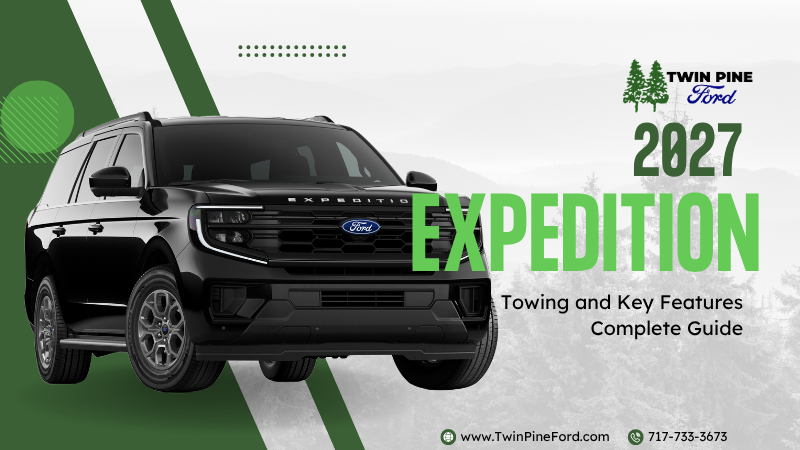
Unlock Massive Hauls: 2027 Ford Expedition 

Unlock Massive Hauls: 2027 Ford Expedition Tows Up to 9,600 lbs with Ease When configured with the standard wheelbase and the optional Heavy-Duty Trailer Tow Package, the 2027 Ford Expedition delivers an extraordinary maximum towing capacity of up to 9,600 lbs. For drivers opting for the extended-wheelbase Expedition MAX, maximum trailering capacity remains a formidable 9,000 lbs. Whether you are transporting a heavy multi-axle travel trailer, a commercial horse trailer, or a multi-engine pontoon boat, the 2027 Expedition stands as one of the most capable full-size body-on-frame SUVs on the market today. At Twin Pine Ford, the #1 Pre-Owned Superstore, in Ephrata, PA, we know our customers demand real capability alongside premium comfort. Built on a high-strength, military-grade aluminum-alloy body mounted onto a fully boxed steel frame, the 2027 Expedition converts engine output into efficient, controlled pull. Standard 4x2 and 4x4 drive systems retain peak tow capabilities when combined with proper axle ratios, ensuring that whether you travel flat interstates or rolling hills across Lancaster County, your Expedition handles high loads without hesitation. If you'd like to check out available options in person, Get Directions to Twin Pine Ford or call our team directly at 717-733-3673. What Engine and Transmission Powertrains Drive the 2027 Ford Expedition Towing Power? Under the hood, every 2027 Ford Expedition relies on Ford's battle-tested 3.5-liter EcoBoost® V6 engine family. The standard tune produces a muscular 400 horsepower and 480 lb-ft of torque, offering instant low-end grunt thanks to twin turbochargers that spool up quickly under heavy acceleration. For those seeking maximum performance, upper trims and specialized packages offer the High-Output 3.5L EcoBoost® engine, boosting output to a thrilling 440 horsepower and 510 lb-ft of torque. This immense power transfers to the pavement via Ford's 10-speed SelectShift® automatic transmission. Featuring wide gear ratio spans and real-time adaptive shift algorithms, the 10-speed box minimizes shift shock while maintaining the engine in its optimal powerband during steep ascents. To complement the powertrain, the 2027 Expedition incorporates optimized rear axle ratios (including an aggressive 3.73 electronic limited-slip differential on select packages) and Selectable Drive Modes. Drivers can easily switch into Tow/Haul Mode via the center console control wheel. Tow/Haul mode alters shift logic to prevent unwanted transmission gear hunting, increases engine braking during downhill descents to save wheel brakes, and holds lower gears longer for brisk acceleration when merging onto busy highways. Combined with standard rear-wheel drive or Intelligent 4WD, the Expedition powertrain makes hauling heavy equipment smoother and far less taxing on long journeys. Take time to Research New Ford Models to learn more about EcoBoost engineering. Essential Equipment: Heavy-Duty Trailer Tow Package and Smart Towing Assist Technologies Heavy-Duty Hardware Achieving maximum tow capacity requires the optional Heavy-Duty Trailer Tow Package. This factory upgrade adds an upgraded heavy-duty radiator, high-capacity engine oil cooler, integrated 7-pin and 4-pin wiring harness connectors, and an electronic limited-slip rear differential with a 3.73 gear ratio. Pro Trailer Backup Assist Backing up a trailer can challenge even seasoned drivers. Pro Trailer Backup Assist lets you steer the trailer with a simple rotary knob on the dashboard while the vehicle automatically manages steering wheel inputs, making tight boat ramp maneuvers stress-free. BLIS with Trailer Coverage Ford's Blind Spot Information System (BLIS) extends radar monitoring beyond the SUV's rear bumper down the length of your trailer. It alerts you to vehicles in adjacent lanes alongside your towed load, significantly increasing highway safety during lane changes. What Trim Levels Are Available for the 2027 Ford Expedition and How Do Towing Limits Compare? The 2027 Ford Expedition lineup offers multiple trim levels engineered for different lifestyle preferences, ranging from family-friendly utility to off-road ruggedness and ultra-luxury. However, standard equipment, wheel sizes, and curb weights subtly affect towing limits across individual trims when properly configured with towing hardware. Trim Level Engine Output Standard Towing Max Towing (Tow Pkg) XL STX / XLT 400 hp / 480 lb-ft 6,000 lbs 9,600 lbs Limited 400 hp / 480 lb-ft 6,000 lbs 9,600 lbs Timberline 440 hp / 510 lb-ft 6,000 lbs 9,200 lbs King Ranch® 400 hp / 480 lb-ft 6,000 lbs 9,600 lbs Platinum 400 hp (Opt. 440 hp) 6,000 lbs 9,600 lbs Expedition MAX (All Trims) 400 - 440 hp 6,300 lbs 9,000 lbs As shown in the table above, standard factory configurations without the Heavy-Duty Trailer Tow Package are typically rated for 6,000 lbs. Adding the tow package unlocks maximum capability across all trims. Explore our wide range of choices online by viewing our Shop New SUVs page. Shop New Ford SUV Inventory Standard vs. Expedition MAX: How Wheelbase Length Impacts Towing Ratings and Handling Choosing between the standard wheelbase Ford Expedition and the extended Expedition MAX involves balancing interior volume against maximum rated towing capacity. The standard Expedition sits on a 122.5-inch wheelbase with an overall length of 210.0 inches, allowing it to achieve the peak rating of 9,600 lbs. The extended Expedition MAX expands to a 131.6-inch wheelbase and 221.9 inches total length, topping out at 9,000 lbs maximum towing capacity. Why does the MAX trim carry a slightly lower towing capacity? The extended chassis and added rear body structural sheet metal add approximately 200 to 300 lbs of overall vehicle curb weight. Because total Gross Combined Weight Rating (GCWR)—the total weight of vehicle, passengers, cargo, and trailer—is governed by engineering safety limits, the added mass of the MAX frame reduces maximum trailer weight slightly. However, many drivers prefer towing heavy loads with the Expedition MAX because its longer wheelbase provides enhanced directional stability on highway journeys, reducing wind cross-buffeting and trailer sway when passing commercial tractor-trailers. What Is the Price Difference Between Standard Expedition and Expedition MAX Trim Levels? When configuring your ideal SUV at Twin Pine Ford, evaluating the cost structure between standard and MAX variants is key. On equivalent trim configurations (such as XLT, Limited, King Ranch®, or Platinum), choosing the extended-wheelbase Expedition MAX typically carries a modest MSRP price step of approximately $3,000 to $3,500 over the standard wheelbase model. This price delta covers the additional high-strength steel frame length, expanded rear quarter body panels, upgraded rear glass, and additional interior acoustic insulation required for the larger cabin footprint. For families who frequently travel on long camping excursions across Pennsylvania with full passenger loads, that price step pays huge dividends in everyday usability. However, if your main objective is pulling maximum weight (up to 9,600 lbs) with optimal ramp maneuverability, the standard wheelbase represents outstanding value. At Twin Pine Ford, our focus is always transparent pricing with no hidden fees. Ask our sales specialists about our No-Haggle Price approach for a stress-free vehicle purchase experience. Feel free to check New Inventory today. How Much Cargo Volume Does the Expedition MAX Have Behind the Third Row for Gear? Behind 3rd Row Space The Expedition MAX expands storage behind the third-row seats to an impressive 36 cubic feet (compared to 21 cu. ft. on standard models). This allows full seating for 7 or 8 passengers while leaving generous room for suitcases, coolers, and outdoor gear. Behind 2nd Row Space Folding down the PowerFold® 60/40 third-row seats opens up 80 cubic feet of flat load floor space in the Expedition MAX, ideal for hauling larger equipment, hitches, generators, and camping supplies while keeping row two open for passengers. Maximum Total Cargo With both the second and third rows folded completely flat, total interior cargo volume in the Expedition MAX reaches a massive 121.5 cubic feet (versus 105 cu. ft. in standard models), turning your SUV into a high-volume utility cruiser. Real-World Hauling: What Can You Safely Tow Across Lancaster County and Susquehanna River Valley? Translating dry engineering figures into practical outdoor capability highlights why the 2027 Ford Expedition is a regional favorite. With a 9,600 lb maximum towing rating, you are empowered to tow severe loads across South Central Pennsylvania without strain: • 28 to 32-Foot Travel Trailers: Heavy dual-axle camper trailers weighing 6,500–8,500 lbs dry are effortlessly handled, even when fully loaded with fresh water, propane tanks, and supplies. • Commercial Boat Trailers: Large 24- to 28-foot fiberglass cabin cruisers or twin-engine pontoon boats easily fall well within the Expedition's rated capacity. • Horse & Livestock Trailers: Multi-horse slant trailers with living quarters (weighing 7,000–9,000 lbs combined) haul with planted stability along rolling farmland hills around Ephrata and Lititz. • Heavy Utility & Car Haulers: Transporting enclosed car trailers loaded with classic vehicles or compact equipment is simple and secure. Whether navigating Route 222 or taking family weekend trips down toward the Susquehanna River Valley, the Expedition offers total towing peace of mind. Visit Your Ephrata Ford Dealer to test drive a model configured for your towing setup. Visit Your Ephrata Ford Dealer Towing Off the Beaten Path: How the Expedition Timberline Handles Rough Terrain Hauling For outdoor enthusiasts who take their adventure trailers off pavement into remote forest campsites or unpaved boat ramps, the 2027 Ford Expedition Timberline offers a specialized blend of heavy towing capacity and off-road engineering. Equipped with a maximum towing rating of 9,200 lbs, the Timberline model is powered by the standard High-Output 3.5L EcoBoost engine delivering 440 hp and 510 lb-ft of torque. It sits higher with 10.6 inches of ground clearance, enhanced approach/departure angles, and 33-inch Goodyear Wrangler all-terrain tires. Underneath, heavy-duty steel skid plates derived from the F-150 Raptor protect the radiator, steering hardware, transfer case, and fuel tank from loose rocks or rutted trails. Intelligent 4WD with a two-speed transfer case and Ford's Trail Control™ system act as low-speed off-road cruise control, maintaining steady traction while negotiating slick or uneven terrain under tow. Payload, Tongue Weight, and GCWR: Essential Safety Math for Towing Maximum Loads Tongue Weight Rules Proper trailer setup requires calculating tongue weight—the downward force placed on the hitch ball. Aim for 10% to 15% of total loaded trailer weight (e.g., 900–960 lbs tongue weight for a 9,600 lb trailer). Always use a quality weight-distribution hitch for loads over 5,000 lbs. Understanding Payload Vehicle payload capacity (typically 1,600 to 1,750 lbs depending on trim) includes trailer tongue weight plus all passengers and cargo inside the Expedition cabin. Be sure combined passenger mass and tongue weight stay within your vehicle door-jamb tire and loading placard limit. Mastering GCWR Gross Combined Weight Rating (GCWR) represents the maximum allowable weight of the fully loaded Expedition and trailer combined (reaching up to 15,500 lbs). Staying within GCWR ratings prevents engine overheating, excessive brake wear, and transmission stress. Maintaining Your 2027 Expedition Transmission and Brakes for Long-Term Heavy Hauling Regular heavy trailering puts increased mechanical demands on vital SUV components. To preserve your vehicle's long-term reliability and performance, consistent preventative maintenance is essential: • Transmission Fluid Service: Frequent towing generates elevated heat inside the 10-speed transmission. Inspect fluid levels regularly and follow severe-duty fluid change schedules. • Brake System Inspections: Ensure brake pads, rotors, and trailer brake controller electrical connections are inspected before major road trips. • Cooling System Maintenance: Check coolant levels and clean radiator fins to maintain optimal engine heat dissipation under heavy throttle loads. At Twin Pine Ford, our factory-trained and certified technicians utilize OEM Ford parts to keep your Expedition performing at peak capability. You can easily Book Your Service Appointment online or speak with our team about maintenance options. Test Drive the 2027 Ford Expedition and Towing Package Options at Twin Pine Ford in Ephrata Ready to experience the unmatched towing power, advanced trailering tech, and luxurious passenger space of the 2027 Ford Expedition? Twin Pine Ford in Ephrata, PA, is your local automotive authority serving Lancaster, Lititz, Reading, and surrounding communities for over 70 years. Visit our showroom at 620 N Reading Rd, Ephrata, PA 17522 to explore our selection of new Expedition models, evaluate trailer package features with our truck specialists, calculate your payments, or Get Your Instant Cash Offer for your trade-in vehicle. We deliver a simple, transparent, and honest dealership experience every single day. Contact Our Team Today 2027 Ford Expedition in Ephrata PA | Twin Pine Ford

Dealerships Near Lancaster and Ephrata

Where Can I Find a Ford Dealership in  Lancaster and Ephrata, PA?

If you are searching for a trusted, full-service Ford dealership directly in Ephrata, PA, look no further than Twin Pine Ford, conveniently located at 620 N Reading Rd, Ephrata, PA 17522. Serving Lancaster County for decades, Twin Pine Ford offers comprehensive automotive services under one roof, including an extensive selection of new Ford vehicles, certified pre-owned options, a high-tech service center, factory-direct OEM parts, and personalized finance solutions. Whether you are shopping for a rugged work truck like the F-150, a family SUV like the Explorer, or an eco-friendly electric vehicle, Twin Pine Ford provides a customer-first buying experience characterized by zero-pressure sales, complete price transparency, and a commitment to long-term reliability. Get Directions to Twin Pine Ford or call our team directly at Call us at 7177333673 to start your driving journey today. Shop All New and Used Vehicles How to Reach Twin Pine Ford from Ephrata and Surrounding Lancaster County Twin Pine Ford is situated right along Route 272 (North Reading Road) in Ephrata, making it exceptionally easy to reach from all major thoroughfares in Lancaster County and Berks County. Drivers arriving from downtown Ephrata will find the dealership just minutes away heading north along N Reading Rd. From Lancaster City & Southern Lancaster County: Take US-222 North toward Ephrata, take the US-322 exit toward Ephrata/Hershey, merge onto Route 322 East, and make a left onto N Reading Rd. Twin Pine Ford will be on your right. From Lititz: Head east on PA-772 E/Rothsville Rd into Ephrata, turn left onto N Reading Rd, and continue north for approximately 2 miles. From Denver & Reading: Take PA-272 South directly into Ephrata. The dealership is conveniently positioned on the left side of N Reading Rd before downtown. What Ford Vehicles Are Available Near Ephrata? Work-Ready Trucks Explore America's favorite pickup lineup. From the legendary light-duty F-150 with EcoBoost and hybrid power options to heavy-duty Super Duty F-250/F-350 trucks built for heavy towing across Pennsylvania farms and jobsites. You can easily Shop New Ford F-150 Inventory or explore our commercial truck options online. Versatile Family SUVs Discover spacious, technology-packed SUVs built for active families. Choose the three-row Ford Explorer for road trips, the agile Ford Escape for suburban commuting, or the adventurous Ford Bronco and Bronco Sport for off-road weekend getaways. Feel free to Shop New Ford Explorer Inventory or Shop New Ford Escape Inventory today. Electrified & Commercial Solutions Step into the future with cutting-edge electric models like the F-150 Lightning and Mustang Mach-E. Local business owners can also browse work-ready Ford Transit cargo vans and chassis cabs designed to keep your fleet running efficiently. Check out our latest stock to Shop Electric Vehicle Inventory anytime. What Is a Recent Local Price Example for a Ford at the Ephrata Dealership? At Twin Pine Ford, transparency is the cornerstone of our sales philosophy. We eliminate high-pressure sales tactics and hidden fees through our simple, transparent no-haggle pricing model, ensuring every customer gets an incredible value upfront. For example, seasonal incentives and dealer savings can make owning a new Ford remarkably affordable. During promotional events like the national American Value. For American Values. program, qualifying new models benefit from employee-level pricing structure (A-Plan equivalence), passing thousands in savings directly to Ephrata buyers. Pair these savings with top-dollar trade-in valuations to maximize your purchasing power. Get Your Instant Cash Offer How Financing and Trade-In Valuations Work for Ephrata Drivers Securing competitive auto financing shouldn't be complicated or stressful. Twin Pine Ford collaborates with a vast network of national Ford Motor Credit programs and trusted local Lancaster County financial institutions to tailor loan and lease terms specifically to your budget. Drivers can streamline their visit by taking advantage of our convenient online finance tools before visiting the showroom. You can instantly Get Pre-Approved for Financing or utilize our trade valuation tool to get a real-time market value for your current vehicle. Whether you have pristine credit or are seeking credit assistance options, our finance specialists work tirelessly to secure optimal rates and manageable monthly payments. What Service Center Hours Do Ford Dealers Near Ephrata Maintain? Keeping your truck or SUV performing at its best requires flexible service appointment options. Twin Pine Ford maintains early-morning, evening, and weekend hours designed around busy working schedules across Ephrata and surrounding communities. Our service department offers early key drop-off options and convenient Saturday availability for routine maintenance, oil changes, tire rotations, brake service, and PA state inspections. You can Book Your Service Appointment online 24/7 to reserve a time slot that fits your schedule perfectly. Do Ford Dealerships in Lancaster County Offer Mobile Service Appointments? Yes! Twin Pine Ford brings certified automotive service directly to your front door or office parking lot with our Ford Mobile Service van. Designed to eliminate waiting rooms and schedule disruptions, our mobile technicians execute routine maintenance without you ever having to leave home. Mobile service capabilities cover essential automotive needs, including synthetic oil changes, battery testing and replacements, wiper replacements, tire rotations, safety software updates, and minor recall repairs. You can easily Request Mobile Service to schedule mobile van dispatch to your location in Ephrata. Where Can You Get Genuine OEM Ford Parts in Ephrata? Motorcraft Components Engineered specifically for your Ford vehicle, Motorcraft spark plugs, brake pads, filters, and fluids offer exact factory fitment and long-term durability. Custom Truck Accessories Personalize your pickup with official Ford accessories, including drop-in or spray-in bedliners, heavy-duty towing packages, tonneau covers, and all-weather floor mats. Expert Parts Guidance Our knowledgeable parts specialists help DIY mechanics and local commercial fleet managers identify the exact part numbers needed for seamless repairs. Order Genuine Ford Parts Why Ephrata and Lancaster County Drivers Choose a Local Ford Dealer Choosing a family-owned local dealer like Twin Pine Ford means investing in a dealership that actively gives back to the local community. Having served Lancaster County drivers for over 70 years, our team understands the practical driving demands of local residents—from icy winter commutes along Route 222 to hauling agricultural loads across local farmland. Unlike distant mega-dealerships, we pride ourselves on building lifelong relationships. You get single-point price transparency, friendly faces who know your vehicle's history, and extended protection plans like GNE Comprehensive Vehicle coverage backed directly by our selling dealership. Feel free to Learn More About Us and experience the difference of local service. A Step-by-Step Checklist for Visiting Your Ephrata Ford Dealer 1. Bring Key Documents Ensure you have a valid driver's license, active auto insurance card, current paystubs (if applying for financing), and your trade-in title with both original keys. 2. Pre-Schedule Test Drives Explore available inventory online beforehand and schedule a test drive so our sales team can have the vehicle prepped, cleaned, and waiting upon your arrival. 3. Value Your Trade Complete our fast instant cash offer tool online to receive a verified trade-in estimate, speeding up your purchase time on the day of your dealership visit. Frequently Asked Questions About Finding a Ford Dealer Near Me Where is the closest Ford dealership to Ephrata, PA? Twin Pine Ford is located directly within Ephrata at 620 N Reading Rd, Ephrata, PA 17522, offering full new/used vehicle sales, certified maintenance, and factory OEM parts. Can I complete my vehicle purchase online? Yes, our digital retail tools allow you to browse inventory, configure payments, value your trade-in, and apply for financing online prior to home delivery or in-store pickup. Does Twin Pine Ford service all makes and models? While specializing in Ford vehicle maintenance, our factory-trained technicians possess equipment and certifications to perform routine service on competitive makes as well. How do I get answers to specific warranty or sales questions? You can visit our Get Answers to FAQs page online or speak directly with our dealership staff by calling Call us at 7177333673. Visit Twin Pine Ford in Ephrata, PA Today Ready to experience a simpler, more rewarding automotive journey? Whether you are looking to test drive the latest Ford F-150, explore competitive pre-owned models, schedule certified routine service, or order factory-direct components, Twin Pine Ford is ready to serve you. Stop by our Ephrata showroom at 620 N Reading Rd, call us at Call us at 7177333673, or Get Directions to Twin Pine Ford online today! Contact Our Team Today Ford Trucks & SUVs in Ephrata, PA | Twin Pine Ford

Call Us