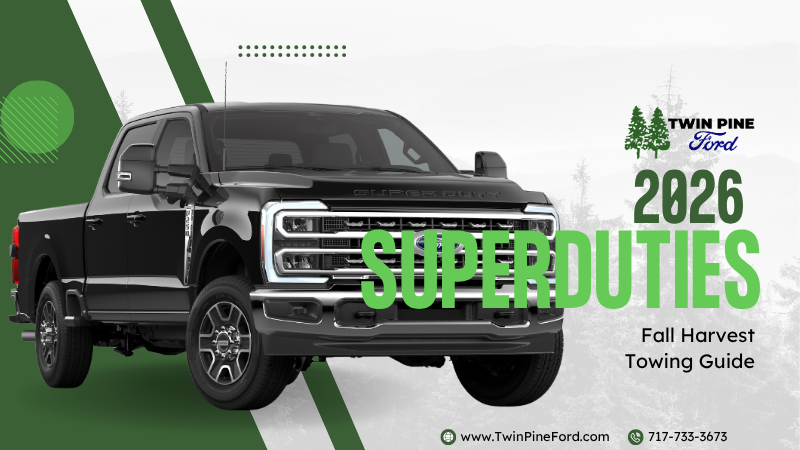

Is the High Output 6.7L Power Stroke Diesel Worth It for Farm Towing in Lancaster County? For agricultural operators navigating the rolling topography of Lancaster County and Ephrata Township, choosing the right powertrain for your heavy-duty farm truck is far more than a simple option check on a window sticker—it directly impacts your daily productivity, operational efficiency, and long-term machinery return on investment. The short answer is yes: the High Output (HO) 6.7L Power Stroke V8 Turbo Diesel—delivering a class-shattering 500 horsepower and an astonishing 1,200 lb-ft of torque—is unequivocally worth the investment for local farmers regularly pulling heavy gooseneck livestock trailers, dense green silage, tandem grain wagons, or heavy agricultural machinery exceeding 15,000 pounds across non-paved access trails and steep grades like Welsh Mountain. Lancaster County farming demands exceptional durability and low-end grunt. When you are pulling out of muddy field gates along Route 322 or negotiating tight farm lanes with a fully loaded 30-foot livestock trailer during peak harvest season, engine strain and thermal stress become major operational concerns. While the standard 6.7L Power Stroke diesel (475 hp / 1,050 lb-ft) remains a formidable workhorse for light-to-medium agricultural chores, the High Output variant provides critical engineering enhancements that deliver effortless hill-climbing power, reduced transit times, and lower overall engine strain when working at peak Gross Combined Weight Ratings (GCWR). At Twin Pine Ford in Ephrata, PA, our commercial truck team works closely with local farm families to evaluate daily workloads and select the exact Super Duty specification required for maximum agricultural productivity. High Output 6.7L vs. Standard Power Stroke Specs: Horsepower, Torque, and Thermal Efficiency Understanding what sets the High Output 6.7L Power Stroke V8 Turbo Diesel apart requires looking under the hood at Ford's severe-duty engine architecture. The standard 6.7L Power Stroke generates an impressive 475 horsepower at 2,600 RPM and 1,050 lb-ft of torque at 1,600 RPM. However, the High Output variant pushes performance further to 500 horsepower and 1,200 lb-ft of low-end torque. To manage this immense power under heavy agricultural duty cycles without overheating or compromising longevity, Ford engineers equipped the HO diesel with a specialized water-cooled turbocharger charger housing, upgraded stainless steel exhaust manifolds designed to withstand severe exhaust gas temperatures (EGTs), and optimized fuel injection calibration. This thermal management upgrade prevents heat soaking when crawling up steep rural grades with heavy machinery, ensuring consistent power output under brutal conditions. Specification Standard 6.7L Power Stroke V8 High Output 6.7L Power Stroke V8 Agricultural Towing Benefit Horsepower 475 hp @ 2,600 RPM 500 hp @ 2,600 RPM Faster highway merging & ramp speed with full loads Torque Rating 1,050 lb-ft @ 1,600 RPM 1,200 lb-ft @ 1,600 RPM Massive pull off field entrances & steep inclines Turbocharger Design Variable-geometry turbocharger Water-cooled turbo housing Prevents thermal degradation under sustained high load Exhaust Manifolds Cast iron alloy construction Heavy-duty stainless steel Resists thermal warping during intense autumn hauling Transmission TorqShift 10-Speed Automatic Reinforced TorqShift 10-Speed Smooth gear shifts with progressive tow-haul modes Fall Harvest Towing Guide: Ford Super Duty F-250 vs. F-350 Capabilities for Rural PA Autumn harvest in Lancaster County demands non-stop operation from dawn until long after dusk. Between hauling dense corn silage from wet fields, transporting 1,500-pound round bales across narrow country lanes, and shuttling grain gravity wagons to local mills, your truck choice dictates your seasonal efficiency. Selecting between the Ford Super Duty F-250 and F-350 depends on your specific agricultural logistics. Grain Wagons & Heavy Silage When pulling unbraked or heavy surge-braked grain wagons down steep rural grades in Ephrata, vehicle weight and braking stability are critical. The F-350 Dual Rear Wheel (DRW) setup combined with the High Output diesel provides an expansive rear footprint that prevents heavy wagons from pushing the truck on loose gravel or damp pavement. Round Bales & Equipment Hauling tandem gooseneck trailers loaded with 20 to 30 large round hay bales requires high tongue weight capacities. An F-350 Single Rear Wheel (SRW) or DRW model equipped with the HO Power Stroke delivers the rear axle stability needed to maintain control on uneven dirt farm lanes without suspension bottoming. Mud & Unpaved Access Roads Lancaster County clay turned slick by autumn rains presents severe traction challenges. The HO 6.7L's electronic-locking rear differential paired with Ford's intelligent 4WD system allows farmers to meter out 1,200 lb-ft of torque precisely, pulling loaded trailers out of greasy field entrances without breaking traction. What Is the Towing Capacity Difference Between the Ford F-250 and F-350? While both the Ford F-250 and F-350 offer the High Output 6.7L Power Stroke diesel engine, their overall towing limits differ substantially based on frame thickness, rear axle size, spring packages, and axle ratios. • Ford F-250 (HO 6.7L): With the available High-Capacity Trailer Tow Package, conventional bumper towing tops out around 22,000 lbs, while gooseneck/5th-wheel towing reaches up to 23,000 lbs. This configuration is ideal for 24-foot livestock trailers, farm utility trailers, and medium skid steer transport. • Ford F-350 SRW (HO 6.7L): Upgrades maximum gooseneck towing to nearly 28,000 lbs, accommodating larger multi-axle machinery floats and heavy livestock trailers. • Ford F-350 DRW (HO 6.7L): Represents the ultimate farm towing platform, offering maximum gooseneck tow ratings up to 38,000 lbs and GCWR capacity up to 43,500 lbs when equipped with 4.10 or 4.30 axle ratios. Shop New Trucks at Twin Pine Ford to find the exact setup for your farm. Shop New Trucks How Do Ford F-250 and F-350 Payload Capacities Compare for Agricultural Equipment? Farm trucks rarely travel empty. Whether carrying pallets of seed bags, 300-gallon liquid fertilizer totes, bed-mounted diesel transfer tanks, or heavy tools, payload capacity is critical. High-output diesel engines carry a heavier curb weight than gas engines, making payload selection essential. F-250 Payload Limits: The diesel engine reduces net bed payload due to the 10,000 lb GVWR ceiling standard on many F-250 configurations. Typical F-250 diesel payloads range from 3,300 to 3,800 lbs. While sufficient for general tools and moderate bed loads, adding a gooseneck pin weight of 2,500 lbs leaves little margin for cargo in the bed. F-350 Payload Advantages: The F-350 steps up to Gross Vehicle Weight Ratings (GVWR) of 11,400 lbs to 14,000 lbs on single rear wheel models, boosting bed payload up to 4,500+ lbs. Dual rear wheel (DRW) variants achieve incredible payloads exceeding 7,500 lbs. For farms routinely installing 100-gallon auxiliary fuel tanks, carrying heavy liquid fertilizer totes, or pulling heavy goosenecks with 3,500+ lb pin weights, the F-350 delivers the necessary spring pack stiffness, upgraded rear axle housing, and legal GVWR overhead to operate without overloading components. Real-World Fuel Economy and Operating Costs on Lancaster Farmland Fuel Consumption Under Tow Surprisingly, the HO 6.7L diesel often achieves equal or better fuel efficiency than the standard diesel when pulling 18,000+ lb loads. Because its 1,200 lb-ft torque curve allows the TorqShift 10-speed transmission to stay in higher gears longer without downshifting, engine RPM remains lower on rolling hills, averaging 11–14 MPG under heavy tow. DEF & Regeneration Cycles Diesel Exhaust Fluid (DEF) consumption scales directly with engine load. Under light farm puttering, active soot regenerations occur periodically. However, heavy farm towing generates sufficient internal exhaust heat (passive regen) to keep DPF filters clean, reducing forced idle regens and preserving fuel during harvest. Unpaved Access Road Durability Heavy farm use on unpaved lane access, rutted tractor paths, and gravel lanes tests chassis resilience. The Super Duty fully boxed high-strength steel frame combined with severe-duty axle seals ensures long service life despite constant exposure to dust, grit, and mud. Are Farm Trucks Eligible for Discounted Registration Fees in Pennsylvania? Local agricultural producers in Lancaster County frequently ask about Pennsylvania PennDOT Farm Truck Registration discounts. Under PA Vehicle Code, active farm operators can significantly cut annual vehicle registration costs by utilizing Form MV-77 (Application for Farm Vehicle Exemption Certificate) or registering under formal Farm Truck (FT) plates. Exemption Classifications: • Type A & B Exemptions: Applies to farm vehicles operated strictly between farms owned or operated by the same farmer within a 25 to 50-mile radius. These classifications reduce registration fees dramatically while exempting trucks from standard commercial inspection rules provided safety requirements are met. • Type C & D Classifications: Designed for larger commercial farm operations transporting agricultural products, livestock, or supplies to market within specified operating radiuses. Weight Class Tax Savings: Because heavy-duty trucks like an F-350 DRW carrying an HO diesel can exceed 14,000 lbs GVWR, standard commercial registration fees in PA can cost several hundred dollars annually. Registering with farm credentials provides substantial recurring savings while legally supporting seasonal harvest hauling. Learn more by speaking with our team or consulting PennDOT guidelines. Smart Towing Technology That Keeps Heavy Loads Stable on Rural PA Roads Maneuvering massive agricultural trailers through tight historic barn doors, narrow livestock chutes, and congested equipment yards requires exceptional visibility and precision. Ford Super Duty models come packed with cutting-edge driver assistance technology designed specifically for agricultural productivity: • Pro Trailer Hitch Assist: Automatically controls steering, speed, and braking to align the truck's hitch ball perfectly with the trailer coupler—saving immense time when hooking up solo in muddy fields. • Onboard Scales with Smart Hitch: Measures payload weight in the truck bed and calculates gooseneck tongue weight in real time, displaying optimal weight distribution directly on the SYNC screen or LED taillights to prevent overloading. • 360-Degree Camera Package for Trailers: Provides bird's-eye camera coverage around both the truck and trailer, giving operators total confidence when backing past farm machinery and tight gates. • Integrated Trailer Brake Controller & Sway Control: Automatically synchronizes electric-over-hydraulic trailer brakes, stabilizing heavy livestock loads on windy, winding rural roads. Browse New Commercial Vehicles Is the HO Diesel Upgrade Cost-Effective for Your Farm's Annual Workload? Upgrading to the High Output 6.7L Power Stroke diesel engine represents a higher initial investment compared to standard diesel or 7.3L Godzilla gas engines. Evaluating cost-effectiveness comes down to annual mileage under heavy tow and overall operational productivity. 1. Time Savings & Reduced Driver Stress: 1,200 lb-ft of torque allows farm operators to maintain posted speeds on steep PA grades without lugging down. Saving 15–20 minutes per haul across multiple harvest trips per day translates into dozens of saved labor hours over a season. 2. Reduced Mechanical Wear: Because the HO engine runs at lower stress levels when pulling 18,000+ lb loads, transmission fluid temperatures stay lower, brake wear is reduced via the high-performance integrated exhaust brake, and component longevity increases. 3. Strong Resale Value: High Output Power Stroke diesels command premium resale value on the pre-owned agricultural market. When it comes time to update your farm fleet, an HO diesel truck retains a high percentage of its original price tag. Maintenance Essentials for High-Output Power Stroke Engines in Agricultural Use Harvest Season Oil Intervals Severe agricultural service requires strict adherence to oil change schedules. Using Motorcraft 5W-40 full synthetic diesel oil protects high-pressure turbo bearings during heavy autumn pulling. Check out our Read Oil Change Advice guide for complete engine care schedules. Bulk Fuel & Water Separators Farms utilizing bulk fuel tanks face elevated risks of moisture accumulation in diesel. Draining your primary fuel-water separator monthly and replacing dual fuel filters every 15,000 miles is vital to protect 36,000-PSI common-rail fuel injectors. Dusty Field Air Filtration Chaff, dust, and debris from dry harvest fields can rapidly clog air intake filters. Inspecting air filters weekly during threshing season preserves full intake airflow and prevents efficiency drops. Schedule service at Book Your Service Appointment. Financing, Section 179 Deductions, and Trade-In Options for Upgrading Your Farm Fleet Investing in a new Ford F-250 or F-350 equipped with the High Output 6.7L Power Stroke diesel offers distinct tax advantages for qualified agricultural operations. Under IRS Section 179 tax deductions, heavy-duty farm trucks exceeding 6,000 lbs GVWR used primarily for business operations may qualify for 100% write-offs in the first year of purchase. Our commercial vehicle finance specialists at Twin Pine Ford work directly with farm accountants and regional agricultural lenders to structure seasonal financing schedules aligned with your crop or livestock cash flows. Get Pre-Approved for Financing online to evaluate custom farm fleet rates. Simple & Honest Trade-In Experience: Upgrading your current farm truck fleet is seamless at Twin Pine Ford. As a family-owned dealership serving Lancaster and Ephrata for over 70 years, we offer transparent, no-haggle trade-in valuations. Whether you are trading in an older Ford, Ram, or GM diesel truck, we ensure you get maximum market value applied toward your new Super Duty purchase. Experience our '2 locations, 1 no-haggle price' philosophy designed to save you time and hassle so you can get back to running your farm. Get Pre-Approved for Financing Test Drive a High Output 6.7L Super Duty at Twin Pine Ford in Ephrata, PA When heavy harvest loads, muddy field gates, and steep Lancaster County hills are a daily reality, having 1,200 lb-ft of torque under your right foot provides total peace of mind. The High Output 6.7L Power Stroke diesel isn't just a powerful engine—it's a reliable partner for your agricultural business. Visit Twin Pine Ford today at 620 N Reading Rd, Ephrata, PA 17522 to compare F-250 and F-350 High Output diesel models side-by-side. Our knowledgeable truck team is ready to assist with custom orders, commercial financing, and severe-duty accessories tailored to your agricultural workload. Get Directions to Twin Pine Ford or Call us at 7177333673 to schedule your test drive today! Visit Your Ephrata Ford Dealer High Output 6.7L Power Stroke Diesel in Ephrata PA | Twin Pine Ford